
Piles
What Is Piles?
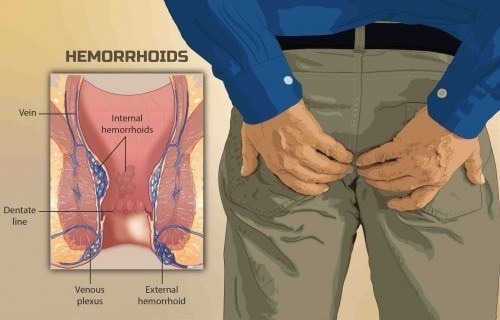
Hemorrhoid or piles is painful condition identified by blood during defection. It is known as Bavasir in the Hindi respectively. It is proctology disorder identified by swelling of the blood vessels present inside and around the anus and rectum. Any damage or injury to such swelled veins causes them to come out of the anus. Hemorrhoids/Piles or Bawasir are the different names of the same problem. Piles are engorged blood vessels in anal area. Approximately 75% of people may have Hemorrhoids / Piles at some point of time in their life. Hemorrhoids are very common in middle-aged person & females also, particularly pregnant women. If searching for a reliable treatment. Visit Ayurwells piles centre which offers the Best Piles Treatment in Hisar.
- Piles CausesFollowing are the possibilities behind the development of hemorrhoids.
- The habit of improper stool excretion.
- Excess eating of junk food and less water intake.
- Excess stress and having colitis or diarrhea or tuberculosis or overweight.
- Following lazy lifestyle with fewer exercises.
- Need to apply pressure for passing of stools during a bowel action.
What Are the Symptoms & Signs of piles?
In general, hemorrhoids are not serious and go away on their own. Although its symptoms are as following:
- Bleeding:-Patient complaints of having bleeding at the time of defecations (while passing the stool). Usually bleeding is painless but sometimes patient may be having severe pain also with or without bleeding.
- Painless bleeding and sticky discharge through the anus.
- Severe pain and soreness near anus during and after stool discharge.
- Itchiness and inflammation surrounding the anus.
- Feeling of stool deposition in anus even after bowel discharge.
- Swelling around Anus:- Initially swelling go back immediately after passing the stool but as disease progress swelling may persist for few minutes to hours. You have to push back with your finger or swelling reduces when sit on bed or hard surface for some time.
- Pain during passing stool
- Itching around the anus
- Mucus discharge
- Feeling of full bowels even after passing stool.
Type of Hemorrhoids/Piles
They are of four types:
- First Degree – It may cause bleeding; they remain inside of the anus.
- Second Degree – They may come out of the anus having defecation but returns to the original site on its own.
- Third Degree – They may come out of the anus. You have to put them to original place by pushing them with finger.
- Fourth Degree – They are present partly inside and outside of the anus, and cannot acquire original position once it comes out of the anus. This type of piles is critical and cause bleeding, pain, and sticky discharge.
External Hemorrhoids or Sentinel piles – They cause wounds that occur besides the anal canal, adjacent to the anus. They are painful, mainly if they have blood coagulation in them.
Prolapsed Hemorrhoids – Develop when the internal hemorrhoids come out of the rectum and expand. They produce itching and bleeding. They are painful and it gives feeling of the unemptied stomach fullness.

How Piles Can Be Diagnosed?
External Hemorrhoids are easily diagnosed by physical examination of anal region. Internal Hemorrhoids are diagnosed by Proctoscopy. Proctoscopy is done with a special instrument called Proctoscopy. You can see your hemorrhoids/piles on the screen during proctoscopy. By proctoscopy doctor will be able to make diagnose whether you are suffering from piles or not. Sometimes other disease like Ulcer, Polyps or even in Cancer Rectum, patient have bleeding while passing stool. proctoscopy should be performed with upmost care to confirm the diagnosis. If living in Hisar, At Hisar piles hospital you can get an efficient diagnosis and Piles Treatment in Hisar.
Piles Treatments
- Non-operative treatment
We use non-operative procedures for primary grade piles. In this, Dr. Sanjay Sharma recommends some natural medicines, lotions or cream. Dr. Sanjay Sharma prepares these medicines by continuous study and research, and they do not have any side effect.
OPD treatment
- Laser Treatment
The treatment is also known as LHP (Laser Hemorrhoids Plasty). It is the painless and rapid procedure gives no scar on the skin.
- Advanced Seton Therapy
It is a combination of traditional and modern techniques in which we use different ayurvedic herbs to prepare medicated Seton. We tag this Seton to piles. Then we remove this herbal thread without surgery and without causing any complications. We perform this entire treatment under the local anesthesia.
- Injection Therapy or Sclerotherapy
The procedure is frequently used to eliminate hemorrhoids. In this, our doctor injects a solution into the root of the hemorrhoids. The chemical agent hardens hemorrhoid and shrinks the hemorrhoid tissue.
- Ksharsutra
It is the same method as Kshar karma. It is Ayurveda treatment first time invented by Acharya Sushrut before 5000 years. Later this therapy was developed by Dr. Deshpande for piles & fistula. This method is best for piles & fistula which does not have any complication and side effects, negligible recurrence. The entire process requires local anesthesia.
- Stapled haemorrhoidectomy
Stapled hemorrhoidectomy is best to treat the third-degree hemorrhoids. By using the stapler and sutures, we repair the expanded hemorrhoidal supporting tissue.
- Rubber-Band Ligation (Banding)
In this, our expert ties a tiny rubber band over the basal portion of internal hemorrhoid. This tie-up cuts the blood flow flowing towards hemorrhoid.
- Kshara karma
It is Ayurveda treatment first time invented by Acharya Sushrut before 5000 years. It is milder than surgery and thermal cautery procedure. The method can treat such places that are difficult to manage through conventional processes.
Pre-Surgery Instructions
- A patient should be full stomach before the procedure or as directed by the doctor.
- You can drink watery liquids 4 hours before surgery.
- You have to come with your family member or friend on the day of surgery.
- Understand the surgery procedure, the risks, advantages, and other options.
- If you are taking any medicines, then tell our doctor before starting the procedure.
- Take prescribed medicines.
- Empty your colon with an enema.
